
Artificial Intelligence has become a major part of everyday life, and ChatGPT is one of the most popular AI tools available today. In 2026, millions of people use ChatGPT for writing, learning, research, productivity, business tasks, coding, and creative projects. Whether you are a student, freelancer, content creator, marketer, entrepreneur, or office professional, ChatGPT can help simplify many daily tasks.
ChatGPT is an AI-powered chatbot that understands natural language and generates human-like responses. Instead of spending hours searching for information, creating content, or solving problems, users can ask questions and receive detailed answers within seconds. Its ability to understand context and provide personalized assistance has made it one of the most widely used productivity tools worldwide.
For beginners, learning how to use ChatGPT effectively can unlock numerous opportunities. The better your prompts and instructions, the more useful and accurate the responses become. Understanding the basics of ChatGPT can help users save time, improve productivity, and complete tasks more efficiently.
This guide explains how ChatGPT works, its key features, practical applications, and tips for getting the best results in 2026.
Key Features of ChatGPT
| Feature | Purpose | Benefit |
|---|---|---|
| Content Writing | Create articles and posts | Saves time |
| Question Answering | Instant information | Faster learning |
| Research Assistance | Topic exploration | Better understanding |
| Coding Support | Programming help | Improved productivity |
| Translation | Language conversion | Global communication |
| Brainstorming | Idea generation | Enhanced creativity |
| Email Writing | Professional communication | Better efficiency |
| Learning Support | Educational assistance | Improved knowledge |
| Business Assistance | Work-related tasks | Increased productivity |
| AI Conversations | Interactive support | Easy problem-solving |
What Is ChatGPT?
ChatGPT is an artificial intelligence chatbot designed to understand and respond to human language. It uses advanced machine learning and natural language processing technologies to generate meaningful responses based on user input.
Unlike traditional search engines that provide lists of websites, ChatGPT directly answers questions, explains concepts, generates content, and helps solve problems. Users can communicate with it as if they were having a conversation with another person.
The technology behind ChatGPT has evolved significantly, making it capable of handling complex requests while maintaining natural and engaging interactions.
Its flexibility allows it to assist with a wide variety of personal, educational, and professional tasks.
How ChatGPT Works
ChatGPT works by analyzing text input and predicting the most relevant response based on patterns learned from large datasets.
When a user asks a question or provides instructions, the AI processes the request, understands the context, and generates a response designed to be helpful and relevant.
The quality of the output often depends on the clarity of the prompt. Detailed instructions usually produce better and more accurate results.
This ability to understand conversational language makes ChatGPT accessible even for users with no technical background.
Creating Effective Prompts
One of the most important skills when using ChatGPT is writing effective prompts.
A prompt is the instruction or question given to the AI. The more specific and detailed the prompt, the better the response will be.
For example, instead of asking for “a blog,” users can specify the topic, word count, tone, target audience, and desired structure.
Clear prompts help ChatGPT generate more useful and accurate content.
Learning prompt-writing techniques is one of the best ways to maximize the value of AI tools.
Using ChatGPT for Content Creation
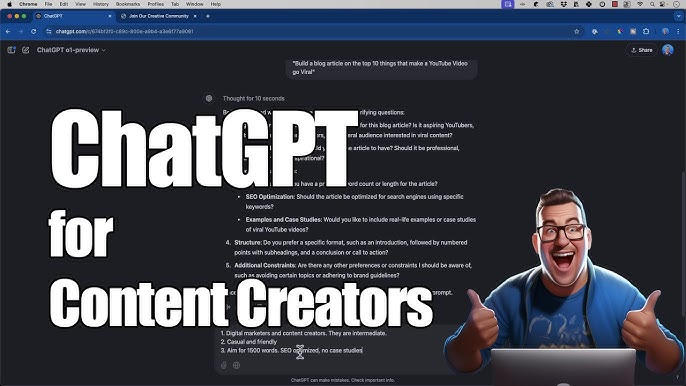
Content creation is one of the most popular uses of ChatGPT. Bloggers, marketers, writers, and businesses use it to create articles, social media posts, product descriptions, newsletters, and website content.
ChatGPT can help generate ideas, create outlines, write drafts, and improve existing content.
It allows creators to work faster while maintaining consistency and creativity.
Although AI-generated content should always be reviewed and edited, it can significantly reduce the time required for content production.
ChatGPT for Students and Learning
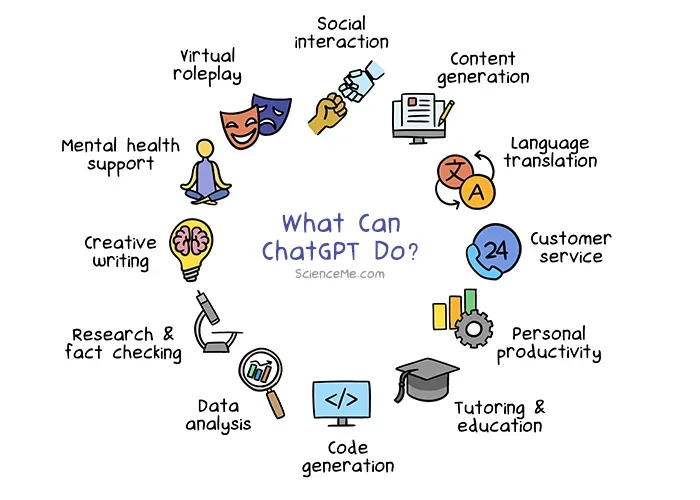
Students are increasingly using ChatGPT as a learning assistant. It can explain complex topics, summarize information, answer questions, and provide study guidance.
Instead of searching through multiple resources, students can receive personalized explanations tailored to their learning needs.
ChatGPT also helps with essay writing, project planning, note organization, and language learning.
When used responsibly, it can become a valuable educational tool that supports academic success.
ChatGPT for Business and Productivity

Businesses use ChatGPT to improve productivity and streamline operations.
The tool can assist with email writing, report creation, customer communication, brainstorming sessions, and meeting preparation.
Entrepreneurs often use ChatGPT for market research, content marketing, and business planning. By automating repetitive tasks, businesses can save time and focus on higher-value activities.
AI-powered productivity tools are becoming increasingly important in modern workplaces.
ChatGPT for Coding and Technical Support
Developers and programmers frequently use ChatGPT to assist with coding tasks.
It can explain programming concepts, suggest code improvements, identify errors, and provide examples for different programming languages.
Beginners can use ChatGPT to learn coding fundamentals, while experienced developers can use it to speed up development processes.
Although AI assistance is helpful, users should always review and test generated code before implementation.
Using ChatGPT for Daily Life

As AI technology continues to improve, its role in personal productivity is expected to grow.
Its versatility allows users to apply AI support across multiple aspects of daily life.
The ability to receive instant guidance and recommendations makes ChatGPT a useful digital assistant.
ChatGPT is not limited to professional use. Many people use it for everyday tasks such as travel planning, meal ideas, fitness suggestions, personal organization, and creative writing.
Tips for Getting Better Results
To achieve better results with ChatGPT, users should focus on clarity and specificity.
Providing detailed instructions, context, and examples helps the AI understand exactly what is needed.
Users should also review responses carefully, especially for professional, academic, or business purposes. Combining human judgment with AI assistance often produces the best outcomes.
Regular practice helps users learn how to communicate more effectively with AI systems.
Pros and Cons of ChatGPT
| Pros | Cons |
|---|---|
| Saves time | May provide incorrect information |
| Easy to use | Requires prompt quality for best results |
| Supports learning | Cannot replace human expertise |
| Improves productivity | Responses may need editing |
| Assists with content creation | Limited understanding of personal context |
| Available anytime | Can generate outdated information |
| Helps with brainstorming | Internet-based features may vary |
| Useful for multiple industries | Overreliance can reduce critical thinking |
Future of ChatGPT and AI Assistants
The future of ChatGPT looks extremely promising. AI systems are becoming more intelligent, personalized, and capable of handling increasingly complex tasks.
Future versions may provide deeper personalization, better reasoning capabilities, improved voice interactions, and stronger integration with digital tools and business platforms.
AI assistants are expected to become a standard part of education, business, healthcare, and everyday life.
As technology advances, users who learn how to work effectively with AI tools will gain significant advantages in productivity and efficiency.
Conclusion
ChatGPT has become one of the most powerful AI tools available in 2026. Its ability to assist with content creation, learning, research, productivity, coding, and everyday tasks makes it valuable for users across different industries and professions.