

We live in an age of unprecedented abundance and friction-free access. With a single tap, you can order groceries to your doorstep, launch a high-definition video call across oceans, generate an article outline, or buy a product tailored specifically to your recent search history.
Yet, this convenience comes at a steep, hidden cost: the systematic drain of your time, focus, and financial resources.
In 2026, the default state of digital life is distraction and passive consumption. Algorithms predict your cravings, targeted marketing pushes you toward impulse spending, and an endless flood of new apps creates a perpetual state of choice paralysis. Navigating this world successfully requires shifting from passive default habits to intentional systems.
This comprehensive guide breaks down how to reclaim your attention, master intentional spending, optimize your digital tools, and build a sustainable daily routine without feeling overwhelmed or deprived.
                         THE INTENTIONAL LIFE MATRIX
┌─────────────────────────────────────────────────────────────────────────┐
│  1. ATTENTION CONTROL   -->  Protect cognitive energy & kill doomscrolling│
├─────────────────────────────────────────────────────────────────────────┤
│  2. FINANCIAL CLARITY   -->  Master Cost-Per-Use & avoid marketing traps  │
├─────────────────────────────────────────────────────────────────────────┤
│  3. AI & DIGITAL STACK  -->  Automate routine tasks with a lean toolset   │
└─────────────────────────────────────────────────────────────────────────┘
Part 1: Reclaiming Attention in a Dopamine Economy
Every app on your phone was engineered by teams of specialists working to capture and hold your gaze for as long as possible. To protect your mental clarity, you must design physical and digital barriers that shield your focus.
The Real Cost of Micro-Distractions
When you switch tasks—even for a split second to glance at a notification—your brain pays a heavy cognitive price known as attention residue. Part of your attention remains stuck on the previous task, reducing your problem-solving capability for up to twenty minutes after the interruption.
                  THE COST OF ATTENTION RESIDUE
┌──────────────────────────────────────────────────────────────┐
│  Primary Task: Writing a Strategy Memo                       │
│  Interruption: 5-second check of a group chat notification   │
│  Result: 15–20 minutes of diluted focus & higher error rates  │
└──────────────────────────────────────────────────────────────┘
4 Friction Strategies to Protect Focus
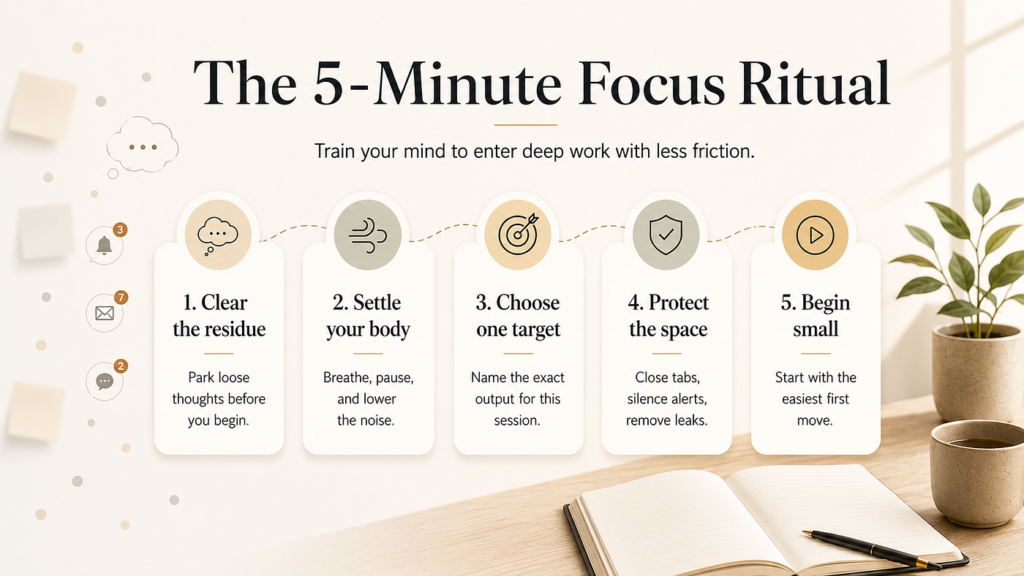
- Grayscale Mode: Switch your phone’s display settings to grayscale. Removing bright, saturated colors instantly renders app icons and notification badges less visually appealing.
- The 30-Foot Charging Rule: Plug your phone in across the room or in another area altogether at 9:00 PM. Removing the device from your bedside table prevents late-night scrolling and eliminates screen time first thing in the morning.
- Notification Minimalism: Disable every push notification except direct human-to-human communications (like urgent calls or direct messages from core family and colleagues). Badges for news updates, sales apps, and social platforms should be permanently muted.
- Time-Blocked Deep Work Sessions: Schedule two 90-minute blocks of uninterrupted focus time on your calendar each day. Treat these appointments with the same strict priority you would give an executive meeting.
Part 2: The Art of Intentional Spending
Smart financial management is not about extreme frugal living or denying yourself comfort. It is about aligning your actual outgoings with your personal values while ignoring artificial marketing traps.
┌─────────────────────────────────────────────────────────────────────────┐
│                         SPENDING MINDSET SHIFT                          │
├───────────────────────────────────┬─────────────────────────────────────┤
│  The Impulsive Consumer           │  The Intentional Shopper          │
├───────────────────────────────────┼─────────────────────────────────────┤
│ • Buys because "it's 50% off!"    │ • Asks: "Would I pay full price?"   │
│ • Relies on overall star ratings  │ • Analyzes 2-star & 3-star reviews  │
│ • Uses 1-click checkout features  │ • Introduces a 24-hour cooling period│
│ • Focuses strictly on initial cost│ • Calculates long-term Cost-Per-Use │
└───────────────────────────────────┴─────────────────────────────────────┘
The Cost-Per-Use (CPU) Formula
When evaluating purchases, calculate the long-term utility of an item rather than focusing exclusively on the initial price tag:
Cost Per Use=Estimated Total Lifetime UsesPurchase Price
| Item Category | Upfront Price | Expected Lifespan / Uses | Real Cost-Per-Use | Value Verdict |
|---|---|---|---|---|
| Fast-Fashion Boots | $40 | 10 wears (sole breaks quickly) | $4.00 per wear | Expensive mistake |
| Durable Leather Boots | $160 | 200 wears (lasts 3+ seasons) | $0.80 per wear | Smart investment |
| Cheap Plastic Blender | $30 | 10 uses (motor burns out) | $3.00 per use | Wasteful purchase |
| High-Efficiency Blender | $150 | 300 uses (lasts for years) | $0.50 per use | Clear winner |
Behavioral Checks Before Buying
- Convert Dollars to Work Hours: Divide an item’s price by your net hourly wage. Ask yourself: “Is this item worth sitting at my desk working for six hours?”
- The 24-Hour Cooling-Off Period: Add non-essential items to a digital wishlist, close the tab, and wait a full day. Over 70% of impulse impulses evaporate once your initial dopamine spike cools down.
- Filter Reviews for Real Experience: Ignore 5-star promotional write-ups and bot entries. Read 2-star and 3-star reviews to discover practical flaws, durability issues, and true sizing.
Part 3: Streamlining Your AI & Digital Ecosystem
The rapid expansion of artificial intelligence has created a new dilemma: software choice overload. Trying to keep up with every new launch drains time without adding value. Build a streamlined stack designed around your daily workflow.
┌─────────────────────────────────────────────────────────────────────────┐
│                       LEAN AI STACK ARCHITECTURE                        │
├───────────────────────────────────┬─────────────────────────────────────┤
│ Tool Category                     │ Primary Operational Purpose         │
├───────────────────────────────────┼─────────────────────────────────────┤
│ General Assistant *(Claude/ChatGPT)*| Drafting, brainstorming, synthesis  │
│ Ecosystem Native *(Gemini)*       │ Workspace file search & automation  │
│ Specialized Research *(Perplexity)*│ Fact extraction with web sources    │
│ Agentic Coding *(Cursor)*         │ Multi-file editing & code refactoring│
└───────────────────────────────────┴─────────────────────────────────────┘
The Human-in-the-Loop Writing Pipeline
Generative AI excels at constructing outlines, summarizing long documents, and overcoming blank-page syndrome. However, publishing unedited AI text without personal review leads to dry, generic copy.
                     THE SANITIZED WORKFLOW
┌───────────────────────────────────────────────────────────────────────────┐
│  Step 1: Ideation       --> Use AI to explore angles & structure outlines │
│  Step 2: Draft Skeleton --> Generate baseline text via AI prompts         │
│  Step 3: Human Voice    --> Inject personal experiences, insights, & tone │
│  Step 4: Verification   --> Cross-check facts, quotes, and primary links  │
└───────────────────────────────────────────────────────────────────────────┘
Conducting a Subscription Audit

Set a recurring 90-day calendar reminder to review your bank and credit card statements. Look for unused app passes, recurring digital services, or streaming tiers you rarely watch. Canceling two or three forgotten subscriptions can redirect hundreds of dollars back into your savings every year.
Annual Savings=Monthly Recurring Fees×12 Months
Part 4: Building a Sustainable Daily Routine
Long-term productivity relies on structured routines rather than temporary bursts of willpower. Design a daily system that protects both your energy levels and your focused time.
The Ideal Daily Structure
┌──────────────────────────────────────────────────────────────┐
│  MORNING: Protect Focus                                      │
│  • Zero screens for the first 30–60 minutes                  │
│  • Morning movement, hydration, and outdoor sunlight         │
│  • Deep Work Block 1: Complete primary strategic priority    │
├──────────────────────────────────────────────────────────────┤
│  AFTERNOON: Collaboration & Admin                            │
│  • Deep Work Block 2: Secondary tasks or research            │
│  • Batch communications, emails, and team meetings           │
│  • Administrative maintenance & digital housekeeping          │
├──────────────────────────────────────────────────────────────┤
│  EVENING: Recovery & Reset                                   │
│  • Digital wind-down starting at 9:00 PM                     │
│  • Phone placed on charger outside the bedroom               │
│  • Reading, light stretching, and preparation for tomorrow    │
└──────────────────────────────────────────────────────────────┘
The 3-Step Audit for Daily Efficiency
- Identify Energy Drains: Track your daily activities for three days to pinpoint where time slips away unnoticed (e.g., reactive email checking or social media browsing).
- Consolidate Low-Value Tasks: Group administrative errands, file organization, and quick replies into a single dedicated batch window each afternoon.
- Review and Adjust: Evaluate your schedule weekly to refine what works and discard habits that no longer serve your goals.
Part 5: Master Checklist for Intentional Living

Run through this practical checklist to keep your attention, spending, and digital systems aligned:
- [ ] Digital Boundaries: Is your phone set to grayscale with non-essential push notifications disabled?
- [ ] Focus Management: Are your daily deep work blocks reserved on your primary calendar?
- [ ] Purchase Filter: Have you applied the 24-hour rule and Cost-Per-Use check to non-essential items?
- [ ] Subscription Clean-Up: Have you audited bank statements for unused recurring charges this quarter?
- [ ] AI Efficiency: Is your tool stack limited to platforms that directly save measurable time?
- [ ] Human Review: Are all AI-assisted writing outputs edited for personal tone and fact-checked for accuracy?
- [ ] Nighttime Boundary: Is your phone charging outside your bedroom to protect your sleep quality?