
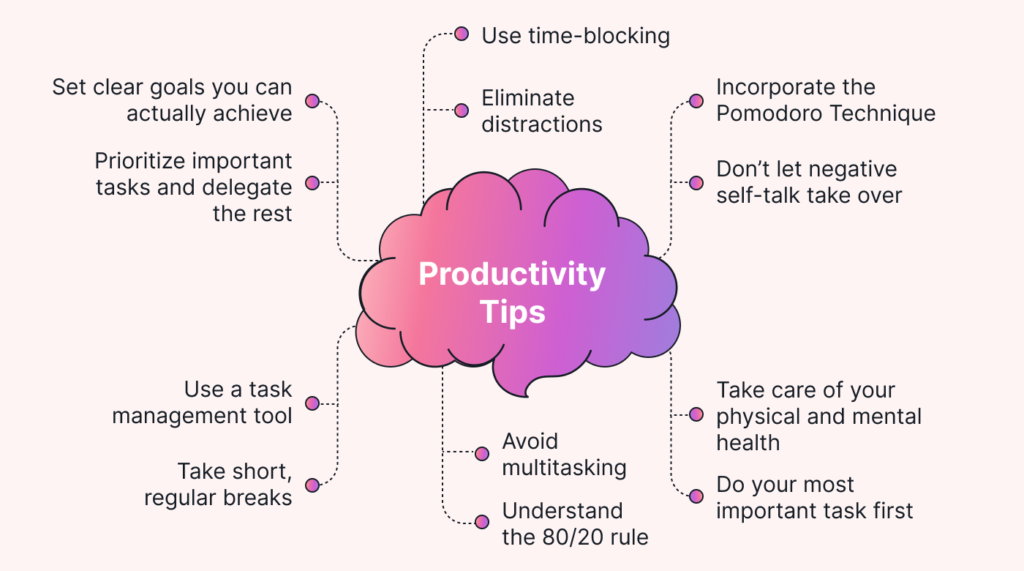
Productivity is not just about completing more tasks in less time. It is about using your time, energy, and resources effectively to achieve better results. Whether you are a student, working professional, freelancer, entrepreneur, or content creator, improving productivity can help you stay organized, reduce stress, and make consistent progress toward your goals.
In a busy world filled with notifications, deadlines, meetings, and daily responsibilities, staying focused can be challenging. The good news is that you do not need to change your entire routine to become more productive. Small improvements in planning, time management, workspace organization, and daily habits can make a meaningful difference.
This guide explains practical ways to improve productivity, common mistakes to avoid, and digital tools that can help you work smarter.

What Is Productivity?
Productivity refers to how effectively you use available time and resources to complete tasks and achieve desired outcomes. It is not necessarily about working longer hours. Instead, it focuses on prioritizing important work, minimizing unnecessary effort, and maintaining a healthy balance between work and rest.
For example, spending three hours on a task that could be completed in one focused hour may indicate an opportunity to improve your workflow. By planning ahead, removing distractions, and using suitable tools, you may be able to finish the task more efficiently.
Effective productivity focuses on three key areas:
- Efficiency: Completing tasks with less wasted time and effort.
- Effectiveness: Working on tasks that contribute to your goals.
- Consistency: Developing routines that help you make progress regularly.
10 Simple Tips to Improve Productivity
1. Plan Your Day in Advance
One of the easiest ways to improve productivity is to decide what needs to be done before your workday begins. Without a clear plan, you may spend valuable time deciding which task to start or switching between unrelated activities.
Create a short daily task list and identify your most important priorities. Keep the list realistic so that you can complete it without feeling overwhelmed.
For example, instead of writing a broad task such as “work on content,” break it into smaller activities such as researching keywords, creating an outline, writing the introduction, and editing the final draft.
Try this: Spend five to ten minutes every evening or morning planning your next day.
2. Prioritize Important Tasks
Not every task deserves the same amount of attention. Some activities directly contribute to your goals, while others can wait or require less effort.
A simple way to prioritize tasks is to divide them into four groups.
| Priority | Type of Task | Example |
|---|---|---|
| High | Important and urgent | Meeting an approaching deadline |
| Medium | Important but not urgent | Learning a new skill |
| Lower | Urgent but less important | Responding to routine requests |
| Optional | Neither urgent nor important | Browsing unrelated content |
Start with high-priority tasks when your energy and concentration are strongest. This helps prevent small activities from taking over your entire day.
3. Break Large Tasks into Smaller Steps
Large projects can feel difficult when you look at them as a single activity. Breaking them into smaller, manageable steps makes it easier to begin and track your progress.
For example, completing a blog post may involve:
- Researching the topic and target audience.
- Selecting relevant keywords.
- Preparing headings and an outline.
- Writing the content.
- Editing and proofreading.
- Adding images, links, and SEO details.
- Publishing and reviewing the page.
Completing one step at a time creates a clearer workflow and makes large projects less intimidating.
4. Use Time-Blocking to Manage Your Schedule
Time-blocking is a productivity technique in which you assign specific periods to different tasks. Instead of working without a schedule, you decide when you will focus on particular activities.
For example, you could reserve the first hour of your workday for important tasks, the next hour for content creation, and a later period for emails or administrative work.
Your schedule should include breaks and some flexibility for unexpected responsibilities.

A sample daily schedule might look like this:
| Time | Activity |
|---|---|
| 9:00–9:15 AM | Review priorities and plan the day |
| 9:15–10:45 AM | Focused work on the main task |
| 10:45–11:00 AM | Short break |
| 11:00 AM–12:00 PM | Continue project work |
| 12:00–1:00 PM | Emails, meetings, or coordination |
| 2:00–3:30 PM | Secondary tasks and content creation |
| 3:30–4:00 PM | Review progress and plan next steps |
Adjust these blocks to your actual working hours, energy levels, and responsibilities.
5. Reduce Distractions
Distractions can interrupt concentration and make simple tasks take longer than expected. Frequent phone checks, unnecessary notifications, background noise, and unrelated browsing can all reduce the quality of focused work.
To create a more productive environment:
- Silence non-essential phone notifications.
- Keep only the tabs and applications you need open.
- Set specific times to check email and messages.
- Keep your desk organized.
- Inform others when you need uninterrupted focus time.
You do not need to eliminate every interruption. The goal is to reduce avoidable distractions and make it easier to return to your work.
6. Try the Pomodoro Technique
The Pomodoro Technique is a time-management method that alternates focused work periods with short breaks. A common approach is to work for 25 minutes and take a five-minute break.
After four work sessions, you can take a longer break. You can also adjust the duration to suit the task, especially if you need longer periods for writing, research, coding, or design.
This method can be useful when you struggle to start a task or find it difficult to concentrate for long periods.
Example: Set a 25-minute timer, work on one clearly defined task, and avoid switching activities until the timer ends.
7. Use Productivity Tools Wisely
Digital tools can simplify planning, task tracking, collaboration, writing, and repetitive work. The right tool depends on your needs, so focus on solving a specific problem rather than installing too many applications.

Here are some categories worth exploring:
| Tool Category | How It Helps | Best For |
|---|---|---|
| Task management | Organizes tasks and deadlines | Teams and individuals |
| Calendar tools | Schedules meetings and work blocks | Professionals and students |
| Note-taking apps | Stores ideas and important information | Research and planning |
| AI writing tools | Supports brainstorming and drafting | Writers and content creators |
| Automation tools | Reduces repetitive manual work | Businesses and teams |
| Focus timers | Structures work and break periods | Anyone who needs better concentration |
You can also explore AltFTool to discover digital tools and productivity resources for writing, content creation, development, marketing, and everyday tasks.
Remember that a tool should simplify your workflow. If managing multiple apps takes more time than completing your work, reduce the number of tools you use.
8. Avoid Multitasking
Multitasking may feel efficient, but frequently switching between complex tasks can make it harder to maintain concentration. It can also increase mistakes and slow down completion.
Instead, try single-tasking: focus on one meaningful activity before moving to the next.
For example, if you are writing a blog, complete a defined section before checking messages or starting another assignment. Group similar tasks together when possible, such as responding to emails in one session rather than throughout the day.
Practical tip: Keep a separate list for unrelated ideas or tasks that come to mind while you are working. Review that list later instead of immediately switching activities.
9. Take Regular Breaks and Protect Your Energy
Productivity depends on more than time management. Your energy, sleep, physical comfort, and mental well-being also affect how effectively you work.
Working continuously without breaks may lead to fatigue and reduced concentration. Short breaks give you an opportunity to move around, rest your eyes, drink water, or briefly step away from your screen.
To support consistent performance:
- Maintain a regular sleep schedule.
- Drink enough water throughout the day.
- Take short movement breaks.
- Eat balanced meals.
- Make time for activities outside work.
The aim is to maintain a sustainable pace rather than push yourself to work at maximum intensity every hour.
10. Review Your Progress at the End of the Day
A short daily review helps you understand what worked, what caused delays, and what needs attention tomorrow.
Ask yourself three simple questions:
- What did I complete today?
- What interrupted my progress?
- What is the most important task for tomorrow?
You can track completed tasks, time spent on major projects, or progress toward weekly goals. Use this information to adjust your routine rather than treating every uncompleted task as a failure.
Common Productivity Mistakes to Avoid
Sometimes, improving productivity means removing habits that waste time rather than adding more techniques.
| Common Mistake | Why It Can Be a Problem | Better Approach |
|---|---|---|
| Creating an unrealistic task list | Leads to stress and unfinished work | Set achievable daily priorities |
| Constantly checking notifications | Interrupts concentration | Schedule message-checking periods |
| Spending too long planning | Delays actual progress | Start with a simple, practical plan |
| Using too many apps | Creates unnecessary complexity | Choose tools based on real needs |
| Skipping breaks | Can increase fatigue | Schedule short recovery periods |
| Ignoring difficult tasks | Allows important work to accumulate | Start with a manageable first step |
| Measuring success only by hours | Rewards time spent rather than results | Track meaningful outcomes |
How to Build a Productive Daily Routine
Building a productive routine does not require a complicated schedule. Start with a few habits that are easy to repeat and gradually improve them.

Morning: Set Your Priorities
Begin by reviewing your schedule and selecting two or three important outcomes for the day. Avoid immediately opening every messaging app or checking unrelated notifications.
During Work: Focus on One Task
Use time blocks, short focus sessions, or a distraction-free workspace to make progress. Take breaks when needed and adjust your approach if a task takes longer than expected.
Afternoon: Handle Routine Activities
Use a designated period for emails, meetings, administrative tasks, and follow-ups. Grouping similar activities can help reduce unnecessary switching.
Evening: Review and Prepare
Check what you completed, note unfinished priorities, and prepare a simple plan for the following day. Once work is finished, give yourself time to rest.
Consistency matters more than following a perfect routine every day.
How to Measure Productivity Effectively
Measuring productivity helps you identify which habits are producing useful results. However, the best measurement depends on the type of work you do.
| Work Type | Useful Productivity Measure |
|---|---|
| Content creation | Quality content completed and published |
| Studying | Topics understood and practice questions completed |
| Sales | Qualified leads followed up and conversions achieved |
| Project management | Milestones completed on schedule |
| Customer support | Issues resolved and customer satisfaction |
| Personal projects | Consistent progress toward defined goals |
Avoid relying on a single measurement. For example, publishing more articles is useful only if the articles meet quality standards and support your broader content goals.
Review your progress weekly. Identify which activities deliver the best results and which processes could be simplified.
Frequently Asked Questions
1. How can I improve productivity quickly?
Start by choosing your three most important tasks, removing unnecessary distractions, and working on one task at a time. A short plan can make your day more organized immediately.
2. What is the best productivity technique?
There is no single technique that works for everyone. Time-blocking, prioritization, single-tasking, and the Pomodoro Technique are useful starting points. Choose the method that fits your work style.
3. How do productivity tools help?
Productivity tools can help you organize tasks, manage deadlines, capture ideas, automate repetitive activities, and collaborate with others. Their value depends on how well they solve your specific needs.
4. How can I stay productive without feeling overwhelmed?
Set realistic goals, divide large projects into smaller steps, take regular breaks, and leave room for unexpected tasks. Focus on consistent progress instead of trying to complete everything at once.