

Look, let’s be completely honest with each other for a minute. How many times have you closed your laptop at 6:00 PM, let out a massive sigh, and thought to yourself, “What on earth did I actually accomplish today?”
You started the morning with bright eyes, a steaming cup of coffee, and a ambitious to-do list. But then a deluge of Slack pings hit, five “urgent” emails landed in your inbox, an unscheduled meeting ate your entire morning, and somehow, the sun is going down and your actual work hasn’t even been touched.
It’s exhausting. And in 2026, despite being surrounded by “productivity-boosting” AI tools, smart apps, and digital calendars, staying focused feels harder than ever.
Time management isn’t about turning yourself into an emotionless efficiency machine or squeezing every second out of your day. It’s simply about taking back control of your schedule so you can get important stuff done and still have enough brainpower left to enjoy your life when the workday ends.
Here is a realistic, human guide to managing your time without losing your sanity.
The Shift: Reactive vs. Proactive Days
The main reason most people feel stressed isn’t because they have too much work—it’s because they spend their entire day reacting to other people’s emergencies instead of driving their own priorities.
| The Reactive Trap (Chaos) | The Proactive Shift (Control) |
| Opening email or Slack the literal second you wake up | Starting the day with your top 1-2 priorities before opening chat apps |
| Treating every incoming notification like a burning building | Batching communication checks into set windows (e.g., 10 AM / 2 PM) |
| Saying “yes” immediately to every quick favor request | Pausing to check your bandwidth before agreeing to new tasks |
| Multitasking across 12 open browser tabs | Single-tasking with zero distractions for 45-minute sprints |
| Working straight through lunch until your brain turns to mush | Taking intentional, screen-free breaks to recharge your energy |
8 Practical Strategies to Reclaim Your Schedule
1. The “Rule of 3” (Ditch the 25-Item To-Do List)

Massive to-do lists are productivity killers. When you stare at a list with 20 items on it, your brain panics, gets overwhelmed, and defaults to doing easy, low-value stuff (like color-coding folders or organizing your desktop) just to feel accomplished.
Try this instead: Every morning, ask yourself one simple question: “If I could only get three things done today before calling it quits, which three would make me feel successful?”
Write those three core tasks down on a sticky note. Put them right under your monitor. Everything else on your master list is secondary. If you finish your big three, great! Anything else is pure extra credit.
2. Time Blocking (Giving Your Hours a Job)
If you leave your calendar completely open, other people will fill it for you with meetings that could have been emails. Time blocking is simply assigning specific blocks of time to specific types of work.
┌─────────────────────────────────────────────────────────────────────────┐
│ A REALISTIC TIME-BLOCKED DAY                                            │
│                                                                         │
│ 09:00 - 10:30 AM ──► DEEP WORK (Big Priority #1 - Zero Chat Apps)      │
│ 10:30 - 11:00 AM ──► Email, Slack Catch-up, Quick Messages             │
│ 11:00 - 12:30 PM ──► DEEP WORK (Big Priority #2)                        │
│ 12:30 - 01:30 PM ──► LUNCH & WALK (Screen-Free Break)                   │
│ 01:30 - 03:00 PM ──► Collaborative Meetings / Calls                     │
│ 03:00 - 04:30 PM ──► Admin Tasks, Small To-Dos, Priority #3              │
│ 04:30 - 05:00 PM ──► Wrap-Up & Planning Tomorrow                       │
└─────────────────────────────────────────────────────────────────────────┘
Don’t panic if your day doesn’t go 100% according to plan. Fires happen. Think of your time blocks as a roadmap, not a strict prison sentence.
3. Stop Multitasking (It’s a Lie)
Here is a cold, hard truth: human brains cannot multitask deep cognitive work. When you think you’re writing an article, replying to a Slack message, and listening to a Zoom call at the same time, you aren’t multitasking. You are task-switching at rapid speed.
Every time you switch contexts, your brain leaves a little bit of its attention behind (psychologists call this attention residue). By mid-afternoon, your focus is completely fried. Pick one task, close the other tabs, throw your phone across the room onto your bed, and stick with that single task for 30–45 minutes.
4. The 2-Minute Rule
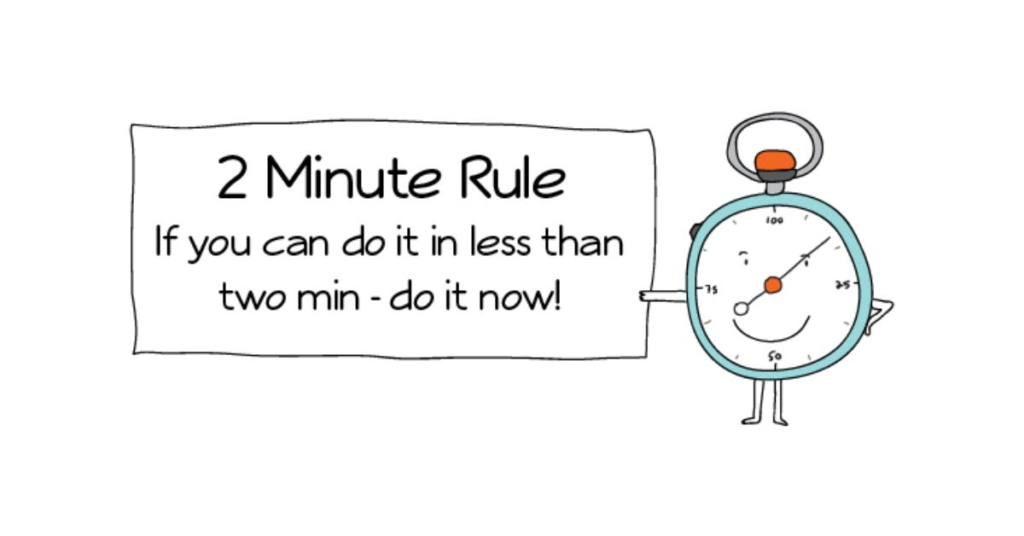
If a incoming task takes less than two minutes to complete—like confirming a meeting time, forwarding a file, or shooting off a quick yes/no reply—do it immediately.
Why? Because writing it down on a to-do list, tracking it, and remembering to do it later takes more mental energy than just knocking it out right now. Just be careful: don’t let 30 tiny two-minute tasks hijack your deep work time. Use this rule during your designated communication blocks!
5. Master the Eisenhower Matrix
When everything feels urgent, nothing is urgent. Sort your incoming daily tasks into these four clear buckets:
                  URGENT                     NOT URGENT
         ┌───────────────────────────┬───────────────────────────┐
         │                           │                           │
IMPORTANT│        1. DO FIRST        │        2. SCHEDULE        │
         │   Crises, Deadlines,      │   Strategy, Deep Work,    │
         │   System Outages          │   Learning, Exercise      │
         │                           │                           │
         ├───────────────────────────┼───────────────────────────┤
         │                           │                           │
   NOT   │        3. DELEGATE        │        4. ELIMINATE       │
IMPORTANT│   Routine Requests,       │   Busywork, Doomscrolling,│
         │   Interruptive Calls      │   Time-Wasters            │
         │                           │                           │
         └───────────────────────────┴───────────────────────────┘
- Do First: Critical deadlines that will break things if ignored.
- Schedule: The high-value stuff that actually moves your life forward (exercise, long-term projects). Guard this box with your life!
- Delegate: Tasks someone else can do 80% as well as you.
- Eliminate: Time-sucking black holes that yield zero real results.
6. Batch Your “Admin Trash”
Context switching drains your energy. Instead of replying to emails as they trickle in every 10 minutes throughout the day, group similar admin tasks together into a single block.
- Email & Messages: Check them twice a day (e.g., 10:30 AM and 4:00 PM).
- Expense Reports / Invoicing: Do them all in one go on Friday afternoon.
- Content Creation / Brainstorming: Reserve Tuesday mornings strictly for creative thinking.
7. Learn to Use AI as an Assistant, Not a Crutch

In 2026, using AI to lighten your workload is a no-brainer. But don’t waste time trying to make AI do your critical thinking for you. Use it for the tedious, mechanical stuff that eats up your hours:
- Drafting & Summarizing: Feed long email threads or meeting transcripts into AI to get a 3-bullet summary instantly.
- First-Draft Outline: Use AI to build a rough outline for a document or presentation so you never stare at a blank screen.
- Code & Formula Debugging: Let AI fix your broken Excel formulas or spot syntax errors in seconds.
8. Shut Down Your Day with a 5-Minute Shutdown Routine
Never close your laptop without planning the next morning. Five minutes before you stop working, do a quick sweep:
- Check what you got done today (celebrate the wins!).
- Move unfinished tasks to tomorrow or back to the master list.
- Pick your Top 3 Priorities for tomorrow morning.
When you walk away from your desk knowing exactly what you need to do tomorrow, your brain stops worrying about work during off-hours. You can actually relax and enjoy your evening.
Where to Spend Energy vs. Where to Save It
Smart time management isn’t just about speed; it’s about spending your mental energy where it yields the highest return.
| Invest Your Mental Energy In… | Save Your Cash / Energy On… |
| Morning Deep Work: Protect your highest-energy hours for hard, complex problem solving. | Perfecting Low-Stakes Tasks: Stop spending 45 minutes formatting an internal slide deck that people will look at for 30 seconds. Good enough is good enough. |
| Clear Communication: Taking two extra minutes to write an crystal-clear message prevents a 10-email back-and-forth chain later. | Trying Every New App: You don’t need 15 productivity tools. A basic calendar, a clean notes app, and a paper notepad beat a complicated app stack every day. |
| Setting Boundaries: Saying “I can’t take this on today, but I can look at it Thursday” protects your current commitments. | Saying ‘Yes’ to Avoid Friction: Agreeing to bad deadlines or unnecessary meetings to please people guarantees burnout down the road. |
Common Time-Management Traps to Avoid

- The “Busyness” Illusion: Being slammed with tasks all day doesn’t mean you were productive. You can spend 8 hours clearing out your inbox and make zero progress on your actual career goals.
- Ignoring Energy Levels: Match your work to your body clock. If you’re a morning person, do heavy brainwork early and save boring admin tasks for the 2:00 PM afternoon slump.
- Guilt-Driven Breaks: Taking a walk, stretching, or eating a proper lunch without looking at a screen isn’t slacking off. It’s reframing your energy so you don’t crash by Thursday morning.